



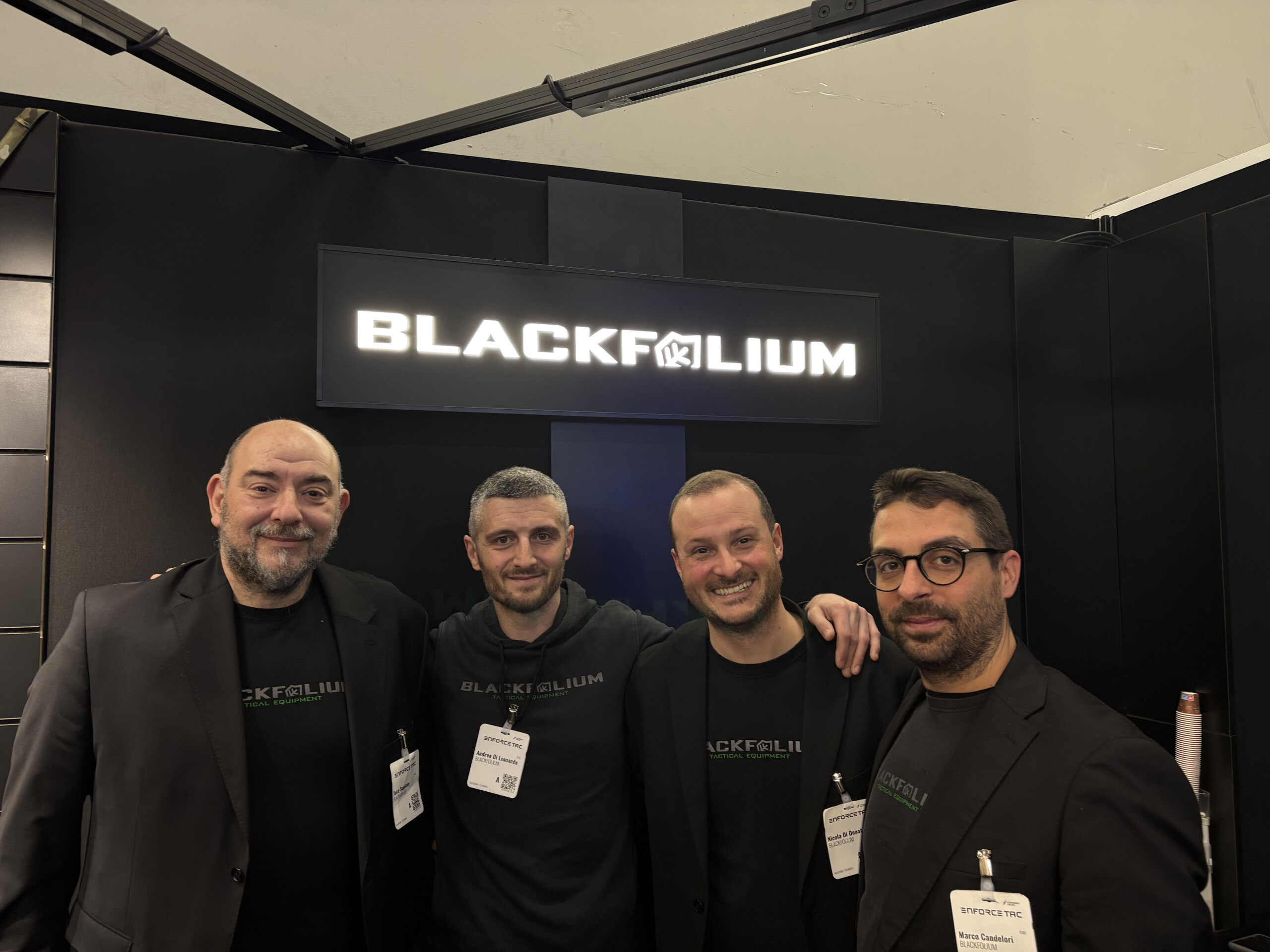
In the current body armor industry, innovation and practical design are becoming increasingly sought after, driven by rising geopolitical tensions and evolving ballistic threats. Among many companies tackling the industry’s potential for development, Blackfolium pursues a unique approach. At Enforce Tac 2026, BodyArmorNews had the opportunity to talk with Andrea Di Leonardo, the founder of Blackfolium. Established in 2016 in Italy, Blackfolium prides itself on the production of cutting-edge, highly creative tactical equipment for special forces units. The leading philosophy behind their work is “obsession with innovation”, in combination with functional designs.
A Foolish Dream
Although 2026 already marks the third year Blackfolium has been presenting its products at Enforce Tac, the company’s origins date back to 2009. Di Leonardo described the beginning as a “foolish dream,” due to his lack of background knowledge on the military industry, and no experience with manufacturing and designing products for consumers. This made it challenging to understand what troops needed on the field and how to practically satisfy those demands. Still determined by his vision, after years of research, studying, and practice (including working with his grandma’s sewing machine), he eventually bought a workshop and established Blackfolium as the company we know today. From the very beginning, Di Leonardo’s goal was to strike a balance between innovation and functionality, and bring this concept into the industry of tactical equipment, which is reflected in the company’s name itself.
“The name is formed by two parts: black is in English, and folium is in Latin. The idea was to match the future innovation, which is represented by the English language, and the roots and the craftsmanship of the beautiful things done in the past from the Latin. Folium in Latin means “leaf,” and I always liked its symbolism, because it can attract light and produce oxygen, thus producing something new.”
A Focused Vision for Tactical Equipment
When asked how Blackfolium differentiates from traditional equipment, Di Leonardo emphasizes the design behind their products. “In the military market, the products tend to offer a lot of features in a single product. But when you are on the field, these features are not all usable, especially in stressful situations.” This opens an important debate about function vs. complexity in tactical equipment, where the “more is better” mindset often leads to poorly placed or unnecessary features that hinder decision-making under pressure. “Blackfolium adopted the contrary concept design. We try to keep the products as simple as possible because we know that when you are in a stressful situation, a simple product works better than a complex one. So we try to keep a very minimalistic and simple design,” Di Leonardo explains.
However, when developing new products, innovation and functionality precede their design and aesthetics. Di Leonardo mentions that every innovation begins by first concentrating on a specific problem. “We’re very focused on the way we can solve it first, without trying to make stuff beautiful without any innovation. The design and the aesthetics of the products are not our first focus in the first stage because we believe that functionality also gives the products aesthetics.” By focusing on practical problems, tactical equipment provides better protection without compromising mobility and enhances performance and safety. Innovative equipment is designed to be versatile, allowing users to quickly adapt gear for various scenarios.
With this in mind, Blackfolium prefers to develop one product at a time over having a full catalogue of products. In fact, in 2018, they started with only one product called the “MARS Sling,” which was born from the cooperation of Blackfolium with an ex-operator for Naval Special Forces Unit in Italy.
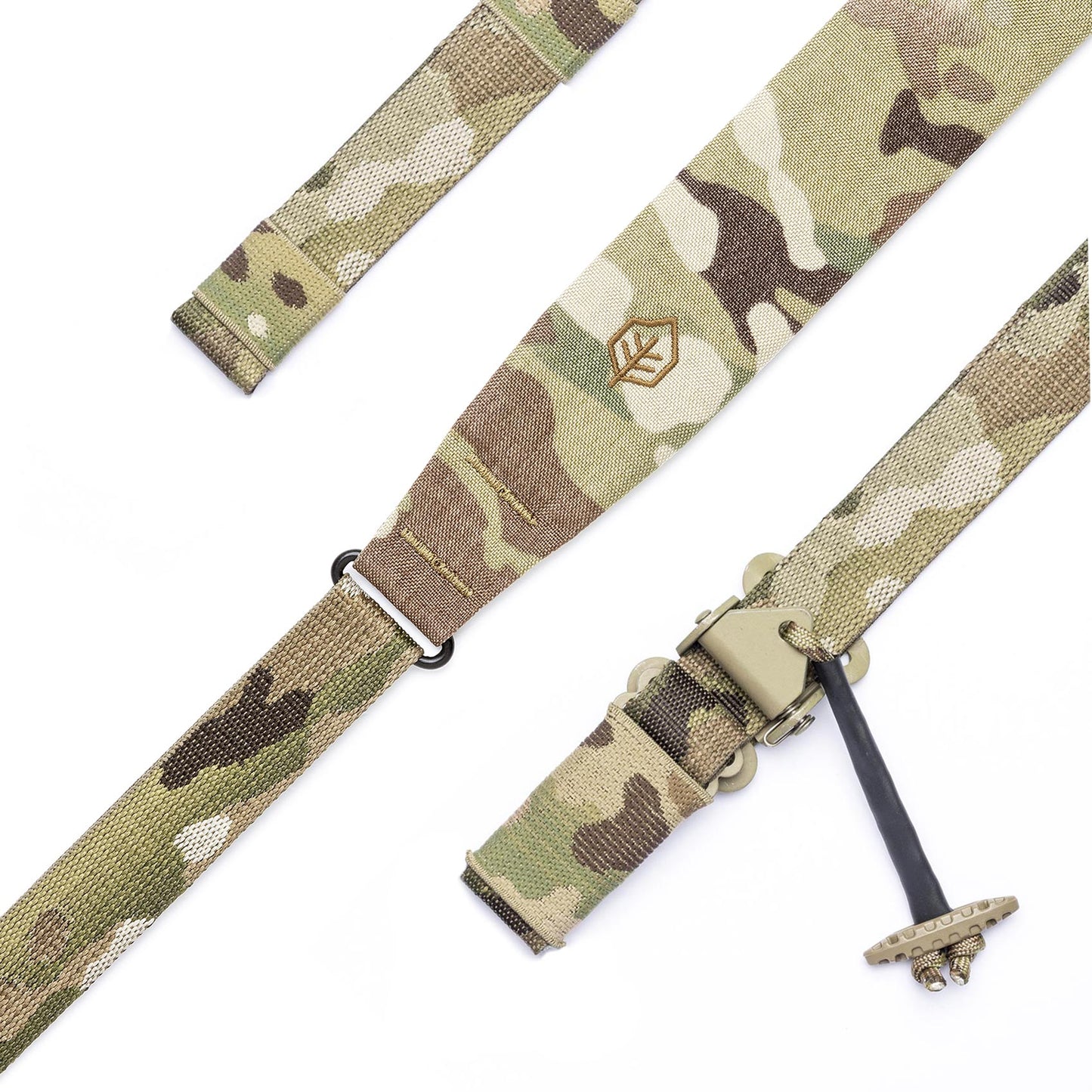
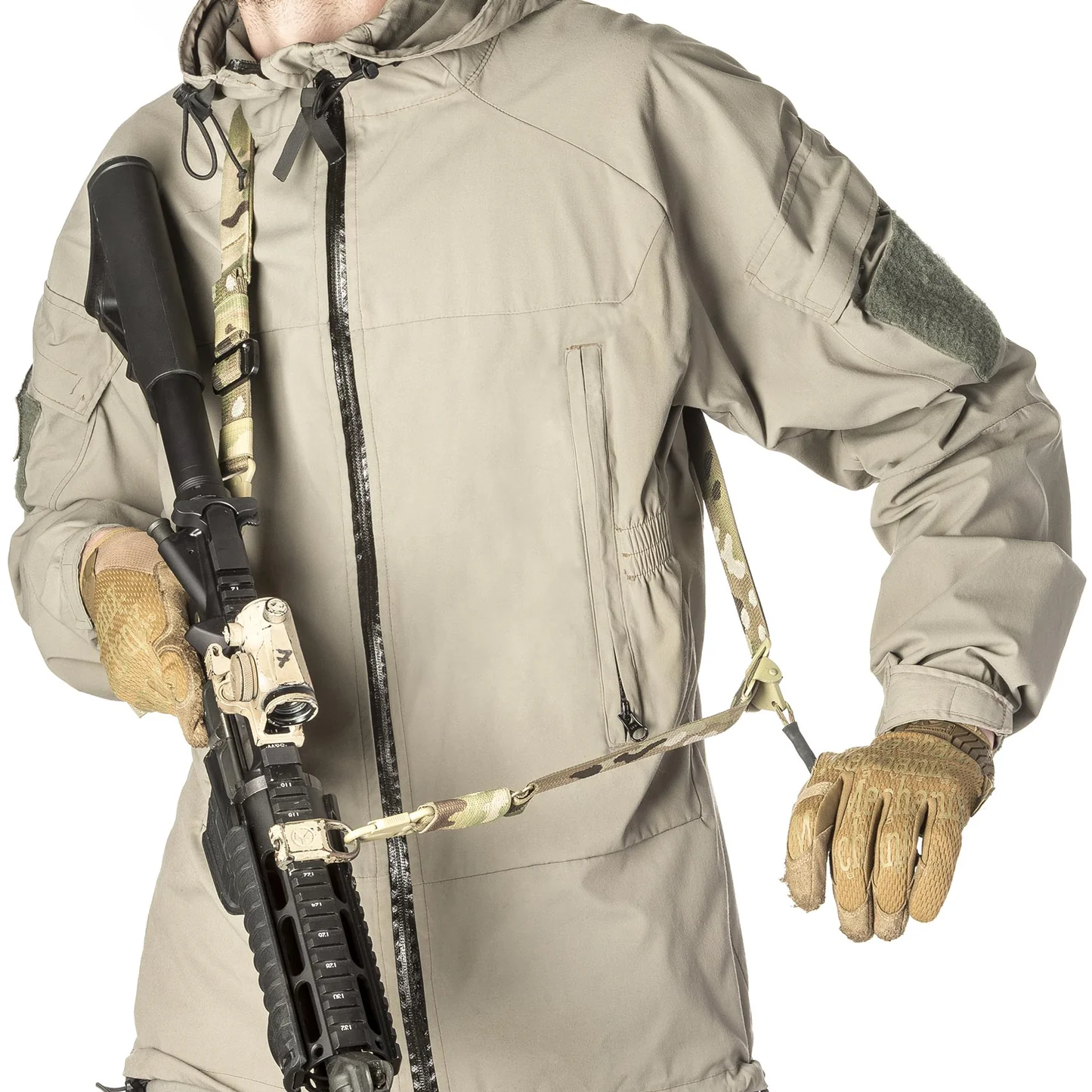
At Enforce Tac 2026, they also presented their latest product, the “LIBRA Harness” – “the most advanced belt combined with safety and protection.” What drove the innovation behind this product was the fact that operators tend to use a sport harness, which can be very uncomfortable, leading to problems with the straps and everything that is attached to the belt. In Di Leonardo’s words, the solution for this was very simple and intuitive, resulting in a system of personal protective equipment specifically designed for tactical-military operations. “The idea was to give operators a combat belt, and when they need it, they can add a leg loop to rapidly transform the belt into a sitting harness for vertical safety.”
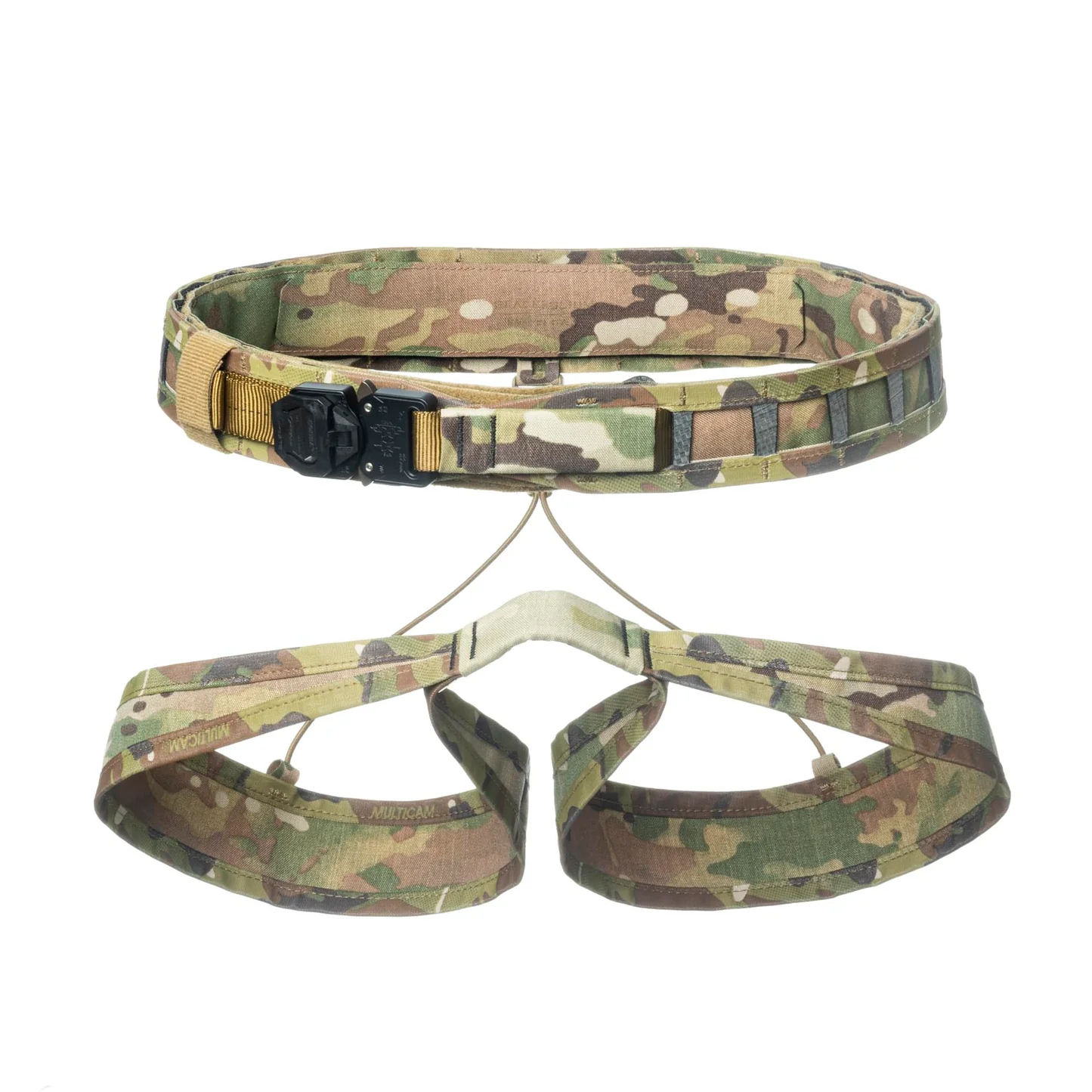
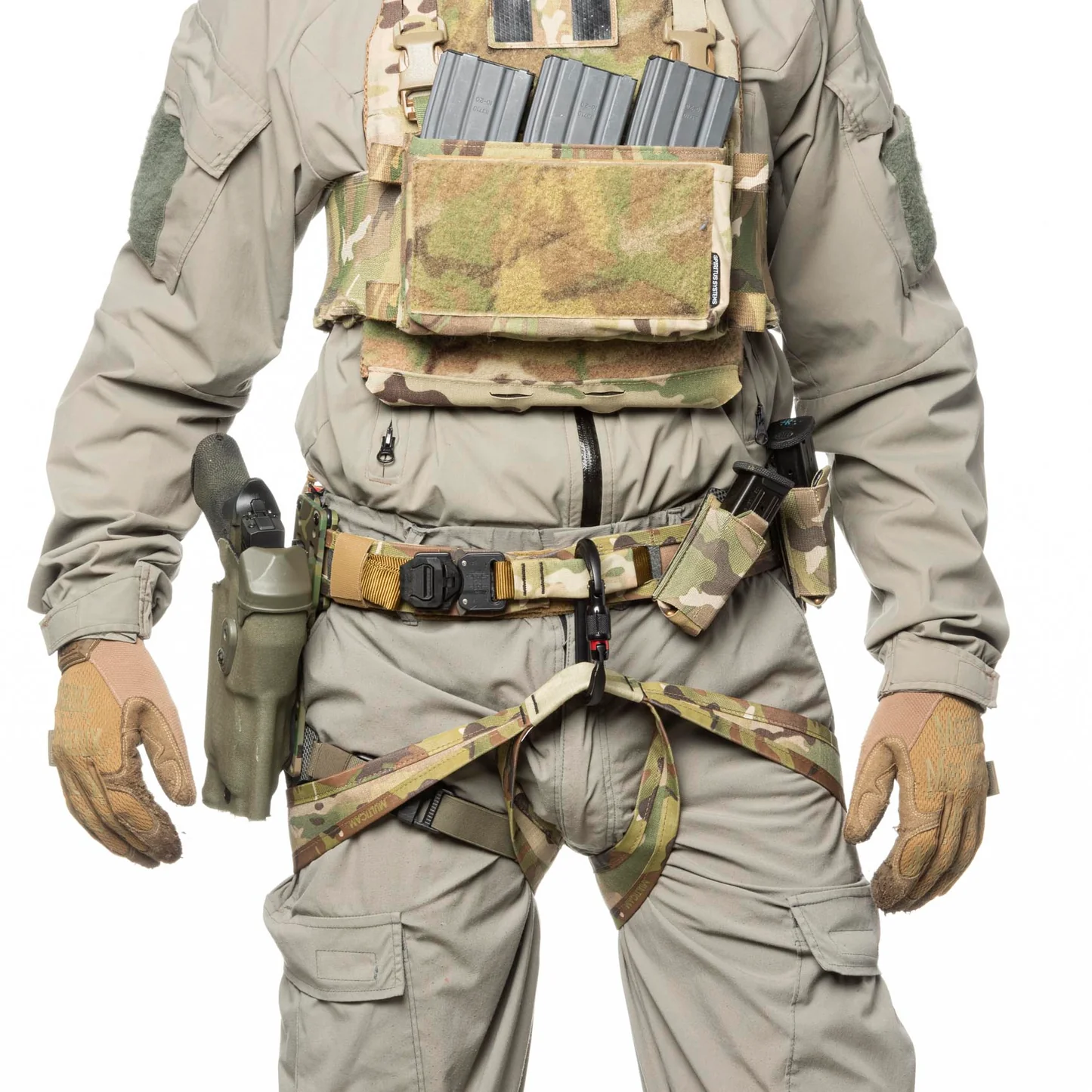
Another important point Di Leonardo highlighted is that the LIBRA Harness is a certified product for rappelling vertical security and ensures compliance with the strict safety standards defined by EN (European Norm) and UIAA (International Climbing and Mountaineering Federation) regulations. Di Leonardo highlights how difficult it is to obtain the certification, but emphasizes that it is nonetheless essential. These standards for tactical equipment help assure the maximum safety, reliability, and performance for operators in high-risk environments. In order to obtain these certifications, products go through rigorous, independent testing for strength and durability, minimizing equipment failure risks, an aspect that is crucial for mission success and saving human lives.
“when people trust in the products and their lives depend on them, this is the right path to choose”
“Made in Europe”
Driven by the Ukraine conflict and other geopolitical changes, the tactical equipment and defense industry is rapidly shifting production and investment to Europe. European nations are rearming, leading to the increased manufacturing of armor, weaponry, and technology within Europe to reduce reliance on foreign suppliers. According to the website of the European Commission, the European Union is “stepping up to protect its citizens and strengthen its defense capabilities, by investing in robust defense, safeguarding [its] people, and ensuring we have the resources to act when needed.”
One of the key initiatives to boost European defense readiness and investment is the “white paper for European Defense – Readiness 2030.” Its goal for the EU countries is to “remain in the driving seat for defense, whilst benefitting from the added value offered by being in the EU” (European Commission). Moreover, the EU is also actively investing in and incentivizing the manufacturing of body armor and related defense equipment within Europe. These policies aim to minimize external reliance through initiatives like the European Defense Industry Programme (EDIP) and SAFE (Security Action for Europe). In doing so, they aim to bolster local production, reduce reliance on foreign suppliers, and promote joint procurement of advanced protective gear.
Closely aligned with these ideas, one of Blackfolium’s standout features is that its products are fully designed and produced in Italy with raw materials from the US. Di Leonardo mentioned that “ten years ago, the reference in the market was the US with its high-end innovation, but in the last year, the European defense industry has grown very fast. All of our products are made in Europe, not only for logistic advantages, but also because it allows us to stay closely connected with the people who make them. Maintaining that relationship with the workers behind our products is very important to us.” Alongside maintaining close relationships with the people directly involved in their chain of production, Blackfolium also places great value on customer feedback. In 2019, they achieved their first procurement for the Italian Special Forces.
“We have direct interaction with Italian special forces. It’s very important because we can give them solutions, and with their feedback, we can improve the design and production. So in my opinion, the main goal is to have an interaction with the Special Forces Unit in order to test and improve our products.”
What the Future Holds
Until now, Blackfolium has primarily specialized in innovative tactical equipment. However, the company is preparing to expand beyond this focus with the development of body armor products. Di Leonardo revealed that several promising solutions are currently in development, including a plate carrier. “We did not launch the body armor at Enforce Tac yet because we want to bring real advantages to customers. The market is already saturated with many solutions, so we prefer to wait until we have something truly innovative before launching it. I hope that by next year we will be ready to present our first plate carrier.” With this careful and innovation-driven approach, Blackfolium continues to prioritize meaningful improvements over rushing products to market, suggesting that its next step into body armor will follow the same philosophy that has shaped the brand so far.
As the tactical equipment industry evolves, the focus on practical design, innovation, and local production is becoming increasingly important. Reflecting these broader trends, Blackfolium’s approach prioritizes functional solutions, careful development, and close collaboration with both users and manufacturers. By combining thoughtful design with European production, the company illustrates how tactical gear can balance innovation, usability, and quality. Whether for body armor or other specialized equipment, the coming years will show how such strategies shape the next generation of tactical solutions.